
Winter Woes

If it seems like all your old problems get worse in Winter, they actually do. Winter has a way of amplifying our familiar aches, pains and chronic vulnerabilities.
Once past the Autumnal Equinox, when the weather turns cold, joints and backs stiffen, headaches become more frequent, and fatigue, digestive problems, sleep difficulties, or depression can become more troublesome. If you've noticed that your chronic problems reliably worsen as Winter approaches, you're not imagining it.
Look at what is happening in the natural world around us. Trees drop their leaves and draw their resources down into their roots. Perennial plants die back above ground and the work of gathering next year’s potential is happening below. Animals change their patterns of activity, food, and sleep. By autumn, it's clear that the tremendous up and out movement in response to the warmth and light of spring and summer has reversed direction. All of Nature is responding predictably to shorter days and cooler temperatures, each species in its own way.
We tend to observe all of this as though it is happening around us. But it is also happening in us. We are Nature in human form, just as the trees are Nature in tree form. We also respond predictably to the short, cold days.
In Chinese medicine, the movement from Summer toward Winter is understood as the gradual decline of Yang (warmth, sunlight). The expansive, outward-moving energy of the warmer months contracts and descends. By around November 1st, we enter full Winter energy, the most Yin (cold, dark) season of the annual cycle, a time of conservation, stillness, and restoration. At the Winter Solstice we reach Ultimate Yin, the point of greatest cold and darkness.
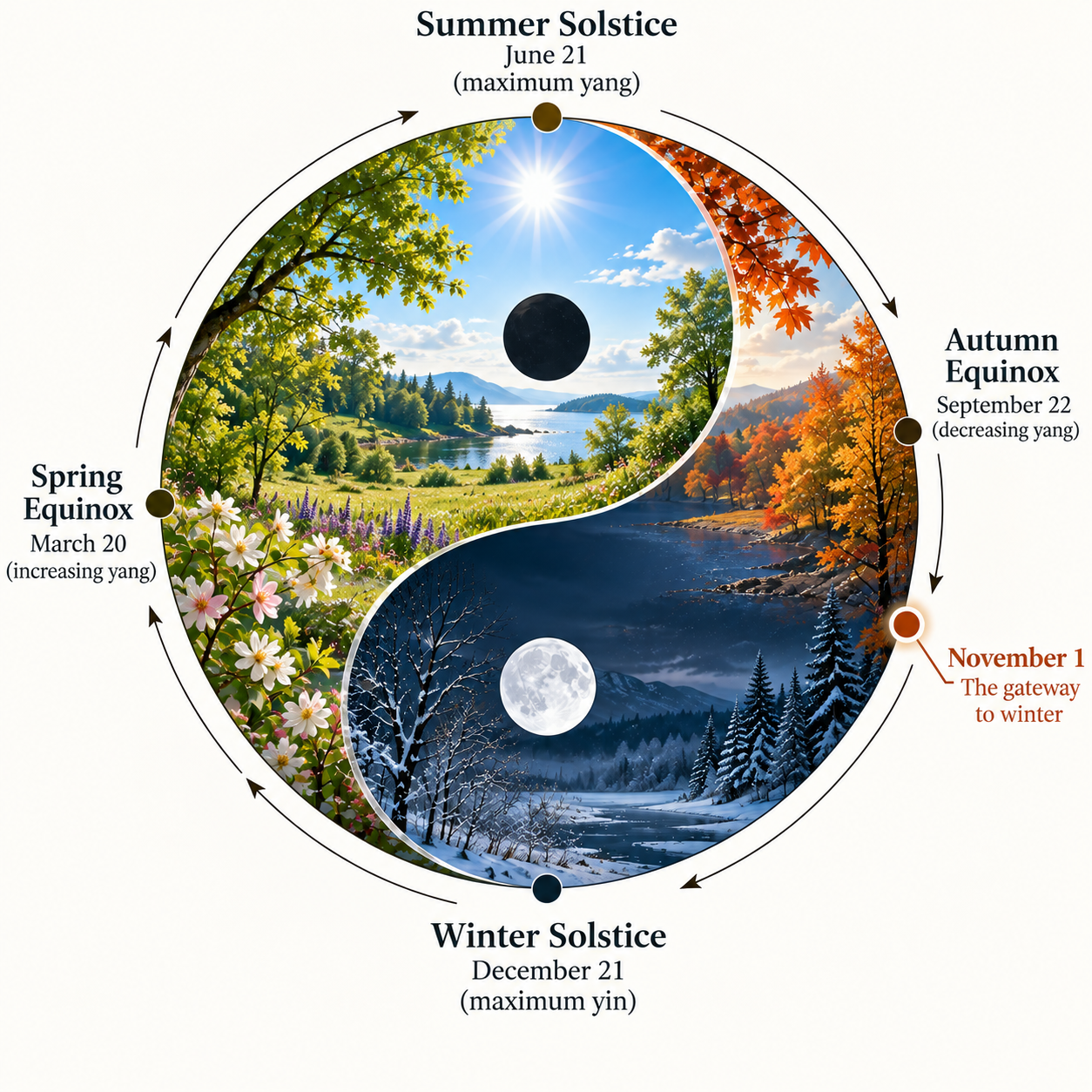
Human beings are not exempt from this movement any more than the trees are. We sometimes talk about “slowing down in winter” as though it is a lifestyle choice. From the perspective of Chinese medicine, it isn't. Our physiology is responding to decreasing light and colder temperatures just like the rest of Nature. We exacerbate problems when we ignore that reality.
So why do our chronic problems get worse?
We all understand what a cold is when we're talking about a respiratory illness. In the West, we don’t think about it being literally cold invading the respiratory system, but this is the approach in Chinese medicine. What happens when we have the extra cold and dark of Winter in other areas of our bodies?
Cold contracts. Conditions that already have a quality of cold, contraction, stiffness, or stagnation often become more pronounced. Joints stiffen. Old injuries begin to ache. Muscles that are tight become tighter. What moved well enough in the warmth of Summer may become more stuck and stagnant as the season contracts around us.
But it isn't only pain. We naturally tend to want more sleep as the Winter darkness deepens. Someone who is already depleted may experience much greater fatigue, especially if they are unable to work with the seasonal pull toward rest and restoration. Depletion may also show up as difficulty staying warm. A weak digestive system may struggle more. Sleep can be affected in either direction, with some people sleeping more and others struggling to get enough. And just as too much cold can aggravate an existing vulnerability, too much darkness can affect our emotional well-being. When there isn't enough sunlight to balance the long hours of darkness, some people develop what we call seasonal depression.
When our problems already have qualities of cold, contraction, stagnation, or darkness, those same qualities in Winter can compound them. One clue is whether your symptoms improve with warmth, light, gentle movement, or rest. Think of tight muscles that relax in a hot bath, or a dark mood that lifts when you spend time in the sunshine or laughing with a friend.
Winter doesn't necessarily create these problems. It amplifies what was already there and is no longer counterbalanced by Summer's warmth and light.
And then there's what we do to ourselves.
While Nature is moving toward conservation and restoration, we often try to maintain exactly the same pace we kept in June. We work the same hours, exercise the same way, expect the same energy from ourselves, and stay up late under artificial light. Just as we approach the darkest and most Yin time of the year, the Holidays arrive, and we often do the exact opposite of what the season is doing: more activity, more socializing, more shopping, more food, more alcohol, more travel, more stimulation, and less rest. We blow through our resources on every level at precisely the time our systems are trying to conserve and restore them. It's no wonder we collapse after New Year.
Imagine insisting that an apple tree continue producing leaves and fruit through January. We immediately grasp the absurdity of it. The tree's Winter restoration phase isn't a failure of vitality. It's the restoration part of the cycle that makes flowering next Spring possible.
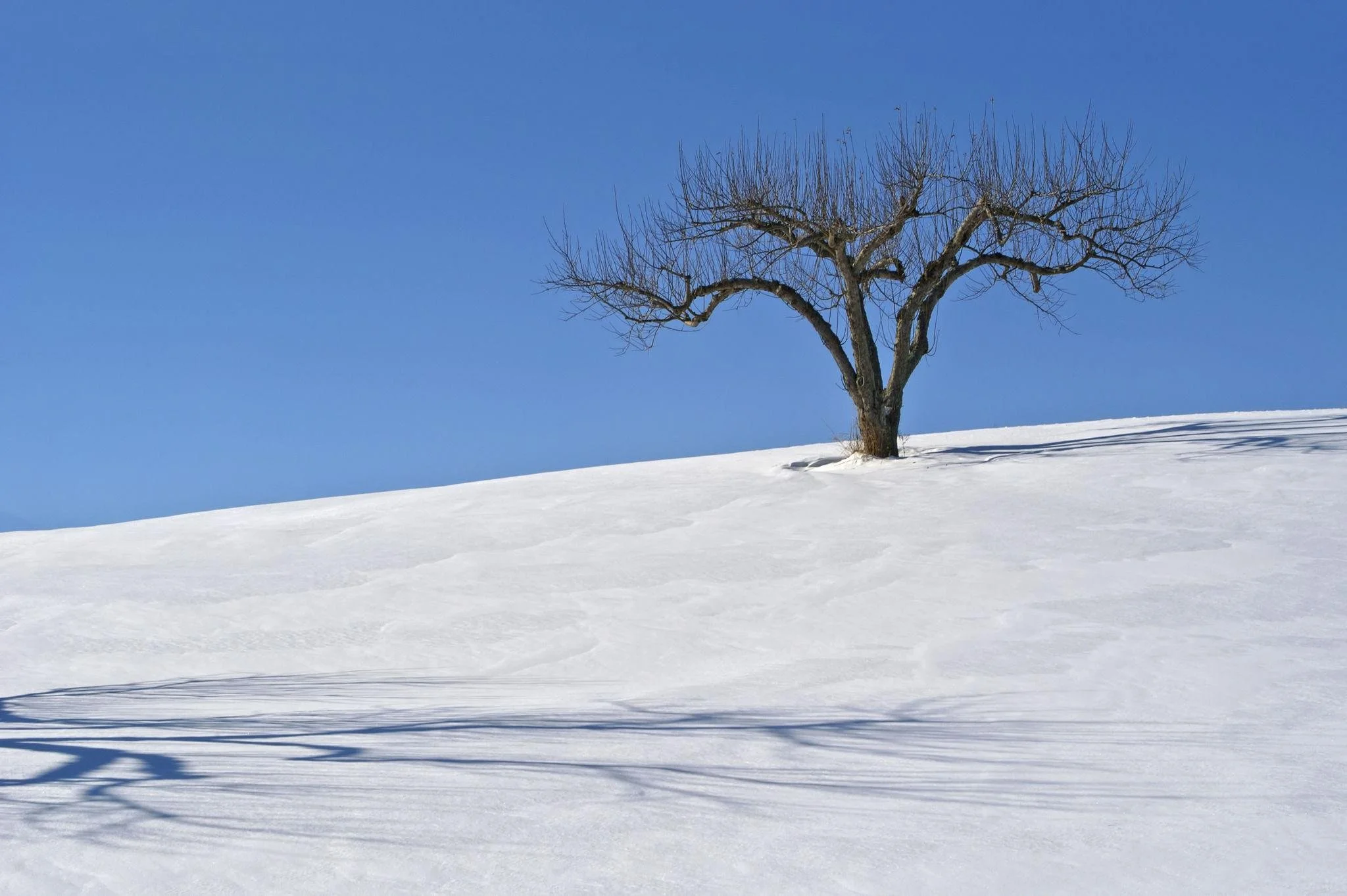
We are Nature, too.
This doesn't mean we need to hibernate or withdraw from our lives for three months. But it does mean recognizing the direction in which our bodies are actually moving and working with that movement rather than continually overriding it. If we can do that, we too will have the energy to fully flower in Spring.
Winter is the season to conserve energy and resources. Sleep a little more. Choose warmth. Eat warm, cooked, nourishing foods. Moderate how much energy you expend on all levels. Gift yourself periods of quiet and stillness. And perhaps most importantly, stop expecting yourself to feel and function exactly as you do in July.
Where Chinese medicine comes in
This is one of the places where Chinese medicine shines. Chronic problems are rarely isolated from the larger terrain or season in which they occur. When something that has been manageable begins to worsen every Winter, that seasonal pattern is useful information. It tells us that the underlying imbalance has qualities of cold, contraction, darkness, or stagnation that are being magnified by the season.
With Chinese medicine, acupuncture, and herbs, we can work to counterbalance those influences rather than simply treating the symptom in isolation. Amazingly, acupuncture points and herbal combinations also have climatic qualities. Through treatment, we can introduce the qualities of warmth and light to counterbalance the cold and darkness of Winter. This is one of the ways Chinese medicine works.
Rather than asking, “How do we make this symptom go away?” Chinese medicine asks, “Why does this particular person become more vulnerable to this particular problem under these conditions and how do we balance it?”
Sometimes Winter makes the answer easier to see.
A Few Things to Keep in Mind for Healthy Wintering

Keep your head, neck, and feet warm. Wear a scarf and hat when you're outside, especially in cold, windy weather.
Eat warm, cooked foods. Favor soups, stews, roasted vegetables, and slow-cooked meals. Ditch the cold smoothies in favor of nourishing blended soups.
Honor the darkness. Go to bed a little earlier and make time to rest, reflect, and restore. Winter is the season of slowing down, turning inward, and replenishing the resources we'll need for spring’s return.
Keep moving, but don't exhaust yourself or sweat too much. Gentle, regular movement helps keep joints flexible, circulation flowing, and Qi moving. Tai chi, qigong, walking, yoga and stretching are all good choices.
Seek out natural daylight. Even on cloudy days, getting outdoors, mid-day if you can, helps support your mood, sleep, and circadian rhythms.
Pay attention to vitamin D. Here in Maine, the winter sun is too low for us to make much vitamin D through our skin. For most healthy adults, supplementing with 1,000–2,000 IU of vitamin D3 daily is generally safe and can help maintain adequate levels through the winter months. You can have your levels checked if you are not sure.
Protect your reserves. Winter is the season for conserving resources of all kinds, including our time, money, and energy. The demands and expectations of the holiday season can easily deplete all three. Be mindful of how you spend these precious resources, respect your limits, and create space for rest and restoration.
Nourish your connections. Winter's inward movement doesn't mean isolation. Make time for the people and relationships that warm your heart.
Cultivate stillness. Set aside a little time each day for meditation, journaling, or quiet reflection. Step away from the noise, screens, and demands of daily life to listen more deeply to what is stirring within you.
Winter is the season of conservation, restoration, and renewal. By living in harmony with its rhythms, we nourish our reserves and prepare for the renewed growth of spring.
My practice has always grown almost entirely through word of mouth, and I am deeply grateful for the trust behind those referrals. If there is someone in your life who has been living with a chronic problem, particularly something that becomes more troublesome during the colder months, please let them know that this is a good time to reach out.
And feel free to forward this email to someone you think might find enjoy it.
Stay warm,
Amy